AI that fits into how people already work.
I work with AI in two ways: designing it inside products that people use all day, and using it in my own design process.
Designing AI inside the product
Korombo is the assistant I designed for the New Power ERP, and it is live. Instead of opening Orders, picking a tab, filling filters and adding totals by hand, a rep asks a question in plain language and asks a follow-up.
Answers you can act on
Data comes back as a table with the same columns people already know from the app, not a paragraph to decode.
Follow-ups keep context
"Which of them are still waiting for approval?" works because Korombo remembers the first question.
Two jobs, one box
The same input answers business questions ("my open quotes") and how-to questions ("how do I create a sales order line?").
Built for being wrong
Every answer ends with "Is this the right answer?", feeding a Feedback view for the team. History, Saves and Favorites keep good answers reusable.
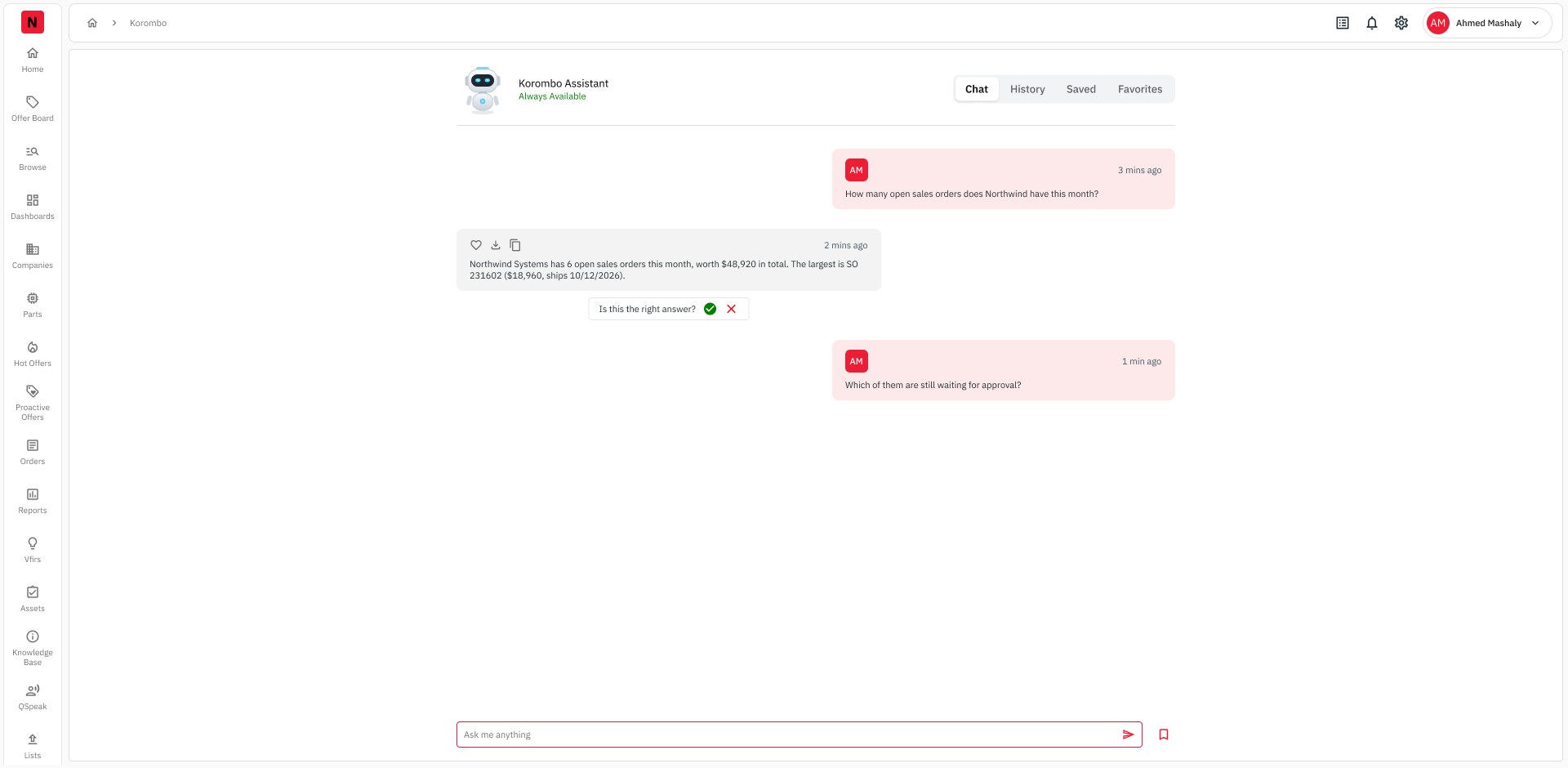
Next stage: a launcher fixed bottom-right on every page, so people ask without leaving their work.
Read the New Power case study →AI as part of an experience
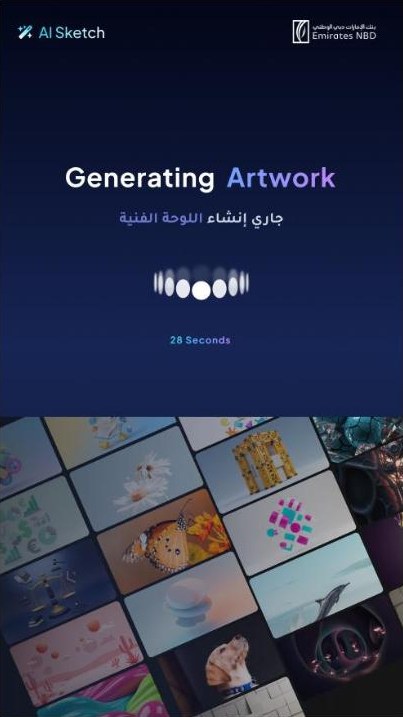
For Emirates NBD and Rayqube I designed a bilingual, Arabic and English, touchscreen experience in which visitors draw and an AI generates their artwork. The waiting moment while the artwork is generated is a designed screen in both languages, and the result ends in a QR code to download it.
AI in my own process
I use AI to move faster on the first pass and keep the decisions myself. I treat its output as a draft to check, not an answer.
Research synthesis and audits
AI-assisted synthesis of research and product audits, so I spend more time on the decisions and less on sorting notes.
Prototyping
AI prototyping with Lovable to test an idea in a working form before it goes into a design file.
An agent for UX audits
I'm building an AI agent that runs automated UX audits, to make the audit step faster and more consistent.
Image and concept work
Midjourney for visual exploration, alongside Claude and ChatGPT for thinking and writing.
What guides my AI design
Put AI where the work is
Korombo lives inside the ERP, not in a separate tool, and its next stage puts it one click away on every screen.
Design for being wrong
Every answer can be rated, so the team sees where it fails instead of guessing.
Return something people can act on
Tables with familiar columns beat paragraphs when people are working through orders.
Keep the person in charge
AI drafts, people decide. That holds for the users of the product and for my own process.